The client walks in with a vague idea: “I want something with flowers but also dark, and I don’t want it to look like anything you’ve done before.” The artist has to guess, improvise and hope that some Pinterest references land close to what the client has in their head.
That guessing game is exactly where AI can be your best assistant.
Turning a vague idea into a visual reference
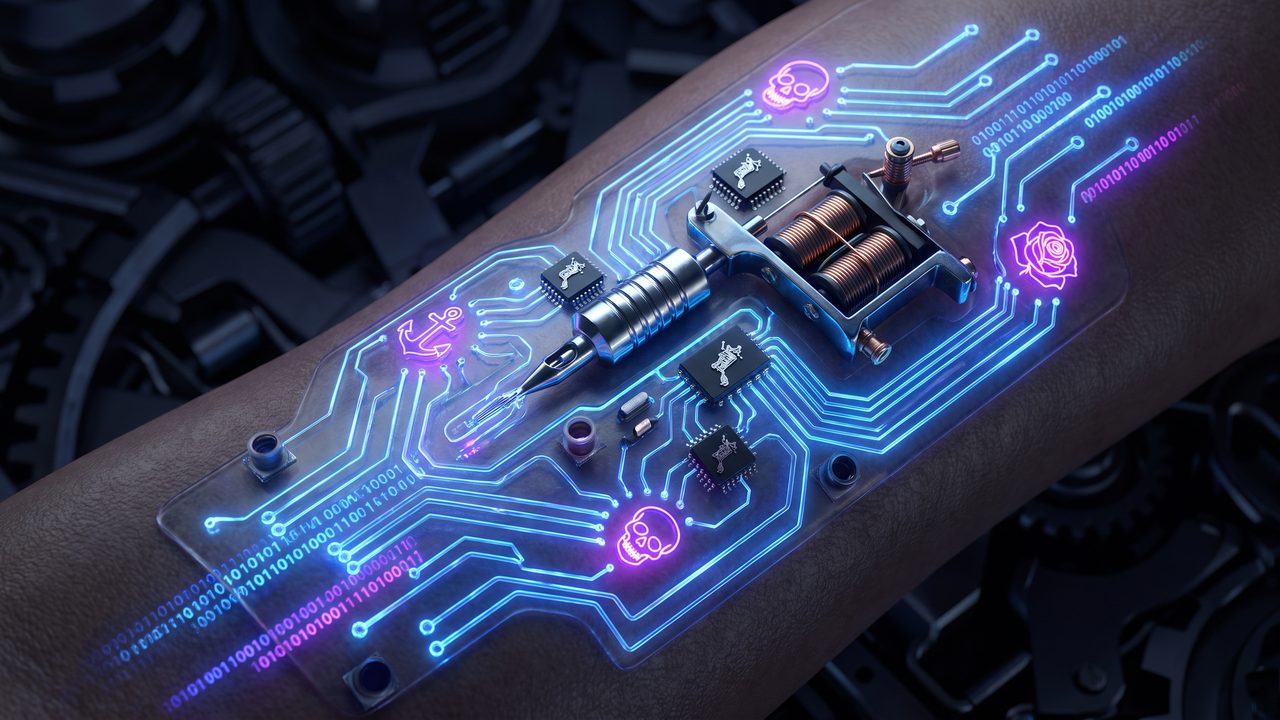
One of the most frustrating parts of the consultation is that the client knows what they feel, but doesn’t know how to describe it. That’s where image-generation tools like Midjourney, Adobe Firefly or DALL-E 3 come in: you describe the idea in text and AI generates visual references in seconds.
Not so the client gets a tattoo of what the AI made, but to use those images as a starting point. The client sees something close to what they imagined, adjusts it with you, and you already have a clear direction before you ever put marker to skin.
The flow is simple:
- The client describes the idea.
- You describe it to the AI: style, elements, mood, palette.
- The AI generates several options in seconds.
- Together you select and refine until you have the right reference.
- You create the final design from scratch, with your style and technique.
The AI doesn’t design the tattoo. It helps both of you speak the same visual language.
Ideas and style variations
If a client wants something “in your style” but doesn’t know exactly what to ask for, you can use AI to generate variations that show possibilities. The same motif (a skull, an animal, a flower) in realism, blackwork, new school or fine line, all generated in seconds.
It also works for your own exploration: when you want to see how an element would look with a certain background, or how two styles would combine, AI gives you quick visuals you can use as reference without committing pencil or time.
Communication and appointment management
A tattoo artist’s work doesn’t end with the design. There are messages to reply to, appointments to confirm, aftercare instructions to explain and deposits to request. AI can speed all of that up too.
With Claude or ChatGPT you can:
- Draft replies to Instagram messages or emails, in your tone and style
- Create appointment confirmation templates with your prices and policies
- Write clear, professional aftercare instructions (in Spanish, English or whatever language you need)
- Build a standard reply for frequently asked questions: how much does it cost, how long does it take, what should the client bring
You don’t have to write from scratch every time. You give the AI a draft, it polishes it, and you adjust whatever you want. Your voice stays yours.
Digital portfolio and social media
Your work lives on Instagram, TikTok and Pinterest, but writing good descriptions for every photo takes time. AI can draft captions that describe the design, mention the style, use the right hashtags and reflect your personality as an artist.
You can also ask it to help write your profile bio, the description on your booking page or the text for your website. All in your voice, without having to leave your artistic headspace to switch into writer mode.
What AI cannot do
AI doesn’t have hands. It can’t do the clean linework of an experienced tattoo artist, or read the skin, or know how much pressure to apply. Your technique, your eye and your years of practice are irreplaceable.
What it can do is save you time on everything that isn’t the tattoo itself: the initial conversation, the visual references, the messages, the content for social media. That time you get back you invest where you truly matter: in the design and in the work.
Start this week
Try this today: the next time a client gives you a vague description, paste it into DALL-E 3 (free with ChatGPT) and generate a few quick references. Just to see if it helps align the vision.
If it works, you’ve already taken the first step. The rest comes naturally.
Want these tools compared in depth? Check the unbiased reviews.