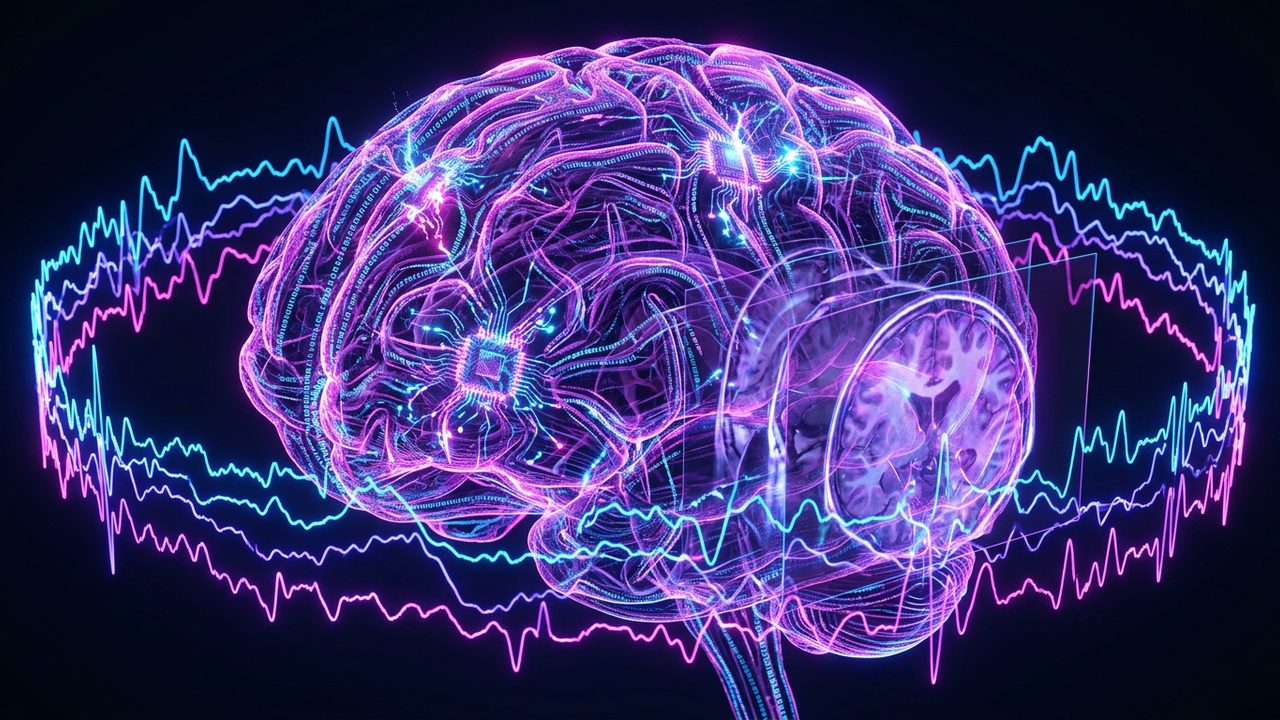
Neurology is one of the medical specialties with the heaviest documentation load and communicative complexity. A single patient with refractory epilepsy may have years of progression, dozens of medication adjustments, multiple imaging studies and electroencephalograms. Explaining their condition in understandable terms is already a task in itself.
Artificial intelligence isn’t here to replace your clinical judgment or diagnostic expertise. It’s here to take the weight off everything that doesn’t require that: text, synthesis and communication.
Always verify information before using it. This content is general guidance and does not replace clinical judgment or constitute medical advice.
Consultation notes: less time at the keyboard
Documentation from a neurology consultation can be detailed and lengthy. With AI you can change the workflow like this:
- During or after the consultation, you dictate or jot down key findings in natural language.
- You pass those notes to the AI: “Organize this as a neurology consultation note in SOAP format.”
- You receive a structured draft that you review and adjust before signing.
Documentation time can be reduced significantly. Not because AI writes the final note, but because the draft already does the heavy lifting.
Record summaries for chronic patients
A multiple sclerosis patient you’ve been following for five years has a rich history that’s hard to navigate in a twenty-minute consultation. You can give the record text to an AI and ask:
“Summarize this patient’s neurological progression over the last two years: documented relapses, treatment changes, most recent imaging studies and current functional status.”
The summary doesn’t replace reading the full record when needed, but it gives you a quick starting point to orient the consultation.
Communicating with the patient: translating the complex into the understandable
Explaining what an ischemic stroke is, how an antiepileptic works or what an MRI result with white matter lesions means is one of neurology’s everyday challenges.
AI can generate tailored educational materials:
“Write an explanation of Parkinson’s disease for a 70-year-old patient with no medical background, using everyday examples and no jargon.”
You can adjust the language level, length and tone. The result can be an information sheet the patient takes home, a script for the conversation or a resource for their family members.
Patient follow-up: faster progress notes
In chronic conditions like epilepsy, migraine or ALS, follow-up requires regular progress notes that usually follow a similar structure. AI can help you generate them faster:
- You give it the data from the last visit (seizure count, medication side effects, functional changes).
- You ask it to draft the progress note following the format you use.
- You review, adjust and sign.
It’s not full automation; it’s reducing the writing work so there’s more time to think about the patient.
Keeping up with neurological literature
Neurology has constant publications: new disease-modifying agents, trials in rare diseases, updates to epilepsy or dementia guidelines. Reading everything is impossible.
AI can help you:
- Summarize the abstract and conclusions of an article before deciding whether it’s worth reading in full.
- Compare the recommendations of two different clinical guidelines on the same topic.
- Explain a trial’s results in simple terms so you can assess whether it applies to your practice.
This doesn’t replace critical reading, but it does prioritize your time.
Science communication: explaining neurology to the non-medical world
If you teach, write a blog, prepare a talk or simply want to communicate your work on social media, AI can help you transform a complex neurological concept into a clear, accessible text.
“Explain what neural plasticity is in a 200-word text, without jargon, with an everyday example.”
The structure is already there; you review it and add your voice.
The clear limits of AI in neurology
The differential diagnosis between focal epilepsy and atypical absence, reading a long-duration EEG or the clinical evaluation of a patient with suspected motor neuron disease are not AI tasks. Neither is managing neurological emergencies.
AI works with the text you give it and can be wrong about information it doesn’t have or misinterprets. That’s why:
- Always review what it generates before using it clinically.
- Do not enter identifiable patient data into tools without a clear privacy policy.
- Use it for drafts, organization and communication, never as a diagnostic source of truth.
One concrete first step
Take the last neurology article you have pending to read. Paste the abstract into Claude or ChatGPT and ask for a two-paragraph summary with the main conclusions. Compare what it tells you with your own subsequent reading.
That takes just five minutes and gives you a real sense of what AI can do for you. From there, the rest follows naturally.
Want these tools compared in depth? Check the unbiased reviews.