If you’re a 3D modeler, you know that a huge chunk of the work isn’t actually modeling: it’s hunting for references, creating textures, documenting assets for your team and wrestling with retopology on complex meshes. All of that eats up hours you could be spending on what you actually enjoy: building.
AI isn’t going to model for you (not yet, at least not well). But it can handle an enormous amount of the work that surrounds modeling, and that changes everything.
Generating visual references in seconds
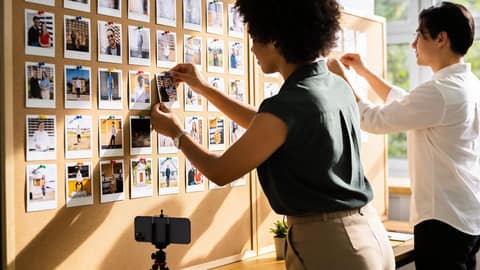
Before you touch a single vertex, you need to know what you’re building. The classic process: open Pinterest, search, save, organize into folders. Half an hour gone, minimum.
With image generation tools like Midjourney or Stable Diffusion, you describe what you need and have references in under a minute. “Mecha suit with damaged panels, sci-fi style, industrial lighting, multiple angles” gives you an instant reference board.
The trick is the prompt: the more specific you are about style, color palette and level of detail, the better your references. I always start with a long, detailed description and then refine it from there.
Textures without fighting Substance or Photoshop
Textures are one of the biggest bottlenecks in 3D work. Building them from scratch in Substance Painter takes time; searching libraries for the right one takes even more.
AI gives you two paths:
- Generate the base texture: with specialized tools you can create seamless textures from a description. “Rusted metal with peeling paint, military green and rust orange color palette” and you have something to work with.
- Modify what you already have: paste an existing texture into a generative AI and ask for variations, palette changes or aging effects. Faster than doing it by hand.
What you still need to do yourself: baking (projecting textures onto the model) and final roughness and metallic adjustments. Your artistic eye is still irreplaceable there.
AI-assisted retopology: a teammate, not a replacement
Manual retopology is precise but exhausting. Tools like ZRemesher (ZBrush) or Blender’s retopology already automate part of it, but the results sometimes need cleanup work. Here AI helps in a different way: as an assistant for making decisions.
You explain the situation to Claude (or ChatGPT): “I have an 80k polygon character for a mobile game with a 5k tri limit. The critical areas are the face and hands. What’s the most efficient retopology strategy?” The response gives you a plan to start from, instead of having to invent it from scratch.
You can also ask it to review your geometry loop by describing where the problem is. It works surprisingly well for unblocking those moments where you’ve been staring at the same edge for 20 minutes without knowing what to do next.
Documenting assets: the thing nobody wants to do
If you work in a team or deliver assets to clients, documentation is part of the job: technical specs, naming conventions, LOD (levels of detail) descriptions, PBR specifications. It’s necessary and nobody wants to write it.
AI writes it for you. You give it the asset data (name, polygon count, texture channels, intended use, engine) and it returns a ready-made technical sheet. You adjust the details that change and you’re done. What used to take 15 minutes per asset now takes 2.
A workflow I use: when I finish an asset, I pass the basic data to Claude using my team’s format and it returns the documentation almost finished. I just review and fix the few things that need adjusting.
Communication with your team and clients
Another area where AI helps a lot: explaining to someone who isn’t a 3D artist why something takes as long as it does, or what a last-minute change really means.
“A client is asking me to cut the character’s poly count in half a week before delivery. How do I explain the impact on visual quality and timeline?” AI helps you draft a clear, professional and honest response, without drama, without technical jargon that scares people, and with the concrete options laid out on the table.
That’s also part of a modeler’s job: knowing how to communicate technical constraints.
Where to start
You don’t have to overhaul your entire workflow at once. Start with one thing:
The next time you go looking for references, try an image generator first. Five minutes of experimenting can give you what you would have spent an hour searching for.
Then, the next time you have to document an asset, hand it to an AI. You’ll see the time drop dramatically.
The creative work of modeling, making form decisions, solving geometry problems, that stays yours. AI just removes the weight of tasks that don’t require your artistic judgment, so you can use your energy where it actually matters.
Want these tools compared in depth? Check the unbiased reviews.