
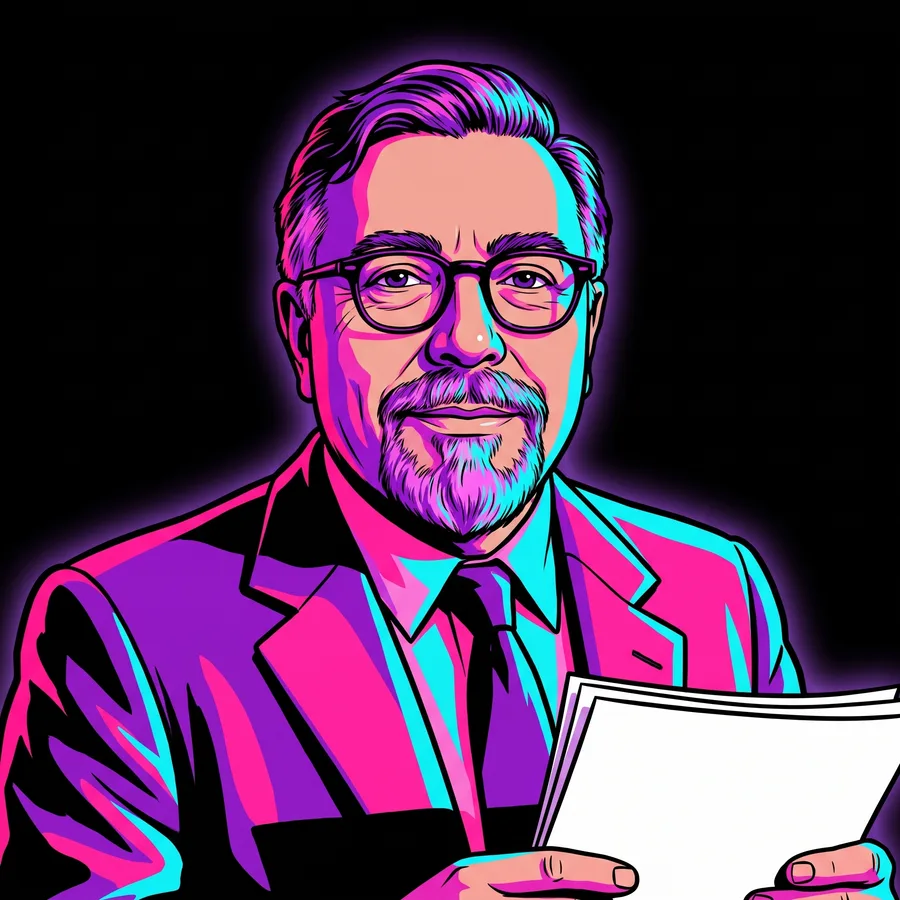
Some people arrive at the future decades ahead of everyone else, and Norbert Wiener was one of them. This American mathematician was born in 1894, earned his doctorate from Harvard at age 18, and spent most of his career at MIT asking a question that at the time sounded almost philosophical: what do a living being and a machine have in common? The answer he built changed the world.
In 1948, when computers were room-sized contraptions, Wiener published "Cybernetics: Or Control and Communication in the Animal and the Machine." The book founded an entire discipline: cybernetics, which studies how systems (biological or artificial) receive information, process it, and adjust based on results. That concept of feedback (the system learns from its own output) is at the heart of nearly everything we call artificial intelligence today. In 1950 he published "The Human Use of Human Beings," a book aimed at the general public where he already spoke, with striking clarity, about the social dangers of automation and the ethical responsibilities of technology creators.
Wiener received the National Medal of Science in 1963, the highest scientific honor in the United States, awarded by President Kennedy (and presented by Johnson just weeks before Wiener's death in 1964). The citation praised his "marvelously versatile and profoundly original contributions" in pure mathematics, engineering, and biological sciences. Marvin Minsky, one of the founding figures of AI, explicitly acknowledged that Wiener's work helped lay the foundations of artificial intelligence.
What impresses me most about Wiener is not just the depth of his science, but that he had the clarity to warn about it. He lived in an era when technology was celebrated without question, and yet he wrote seriously about its consequences for labor, for inequality, and for humanity. If today you see someone on social media debating whether AI will take our jobs or wondering whether machines can "learn," they are asking the question Norbert Wiener planted in the world in 1948. And that, whether you use Claude or not, is his living legacy.
Official links for Norbert Wiener, The father of cybernetics
More figures who shaped AI in AI Legends, or back to the news.