
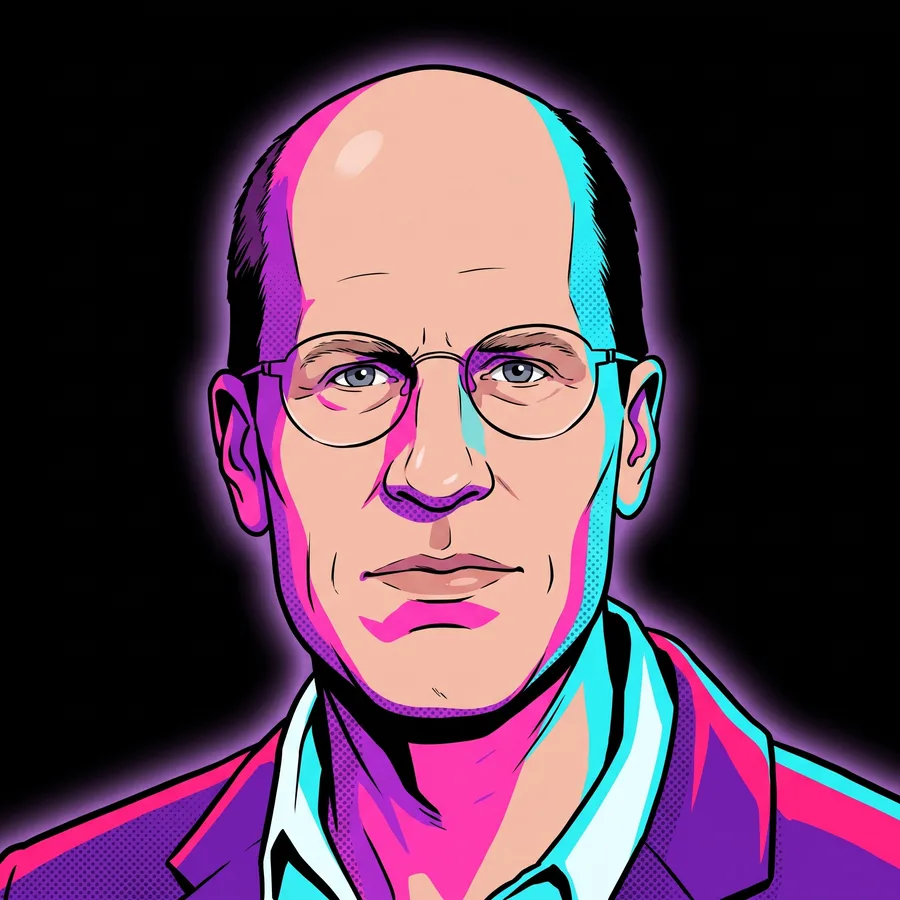
Nick Bostrom is the Swedish philosopher who turned the most unsettling questions about the future of artificial intelligence into a serious field of study. In 2003, when AI was still a distant promise for most people, he published his "simulation argument" in The Philosophical Quarterly: the idea that if an advanced civilization can run detailed simulations of its own past, it is statistically more likely that we live inside one of those simulations than in the original reality. It was philosophy with mathematics built in, and it put his name on the global intellectual map all at once.
But if there is one work that defined the debate about AI's future, it is "Superintelligence: Paths, Dangers, Strategies" (Oxford University Press, 2014), a New York Times bestseller recommended by Elon Musk and Bill Gates. In that book, Bostrom does not claim that AI will destroy us: he says that if we create an intelligence greater than our own without first solving the alignment problem (how to ensure its goals remain ours), we could lose control before we even notice. This was not alarmism; it was applied mathematics for ethics, years before that conversation reached the headlines.
In 2005, he founded the Future of Humanity Institute (FHI) at the University of Oxford, one of the first academic centers in the world devoted exclusively to existential risks from AI and other emerging technologies. He was a professor at Oxford until 2024, when the university closed the FHI after nearly two decades of research. He appears twice on Foreign Policy's 100 Global Thinkers list (2009 and 2015), won the Eugene R. Gannon Award, and is one of the most-cited philosophers in the world with over 200 publications.
What strikes me most about Bostrom is not that he was right before others; it is that he used philosophy to ask questions engineers do not always ask themselves. "For whom are we building this?" is the question running beneath all his work. Today, when you use Claude or any other AI, someone had to think through those questions first so the tool could reach you with more care than speed. Bostrom was one of those people, without waiting for it to be popular to be one.
Official links for Nick Bostrom, The philosopher of existential risk
More figures who shaped AI in AI Legends, or back to the news.