
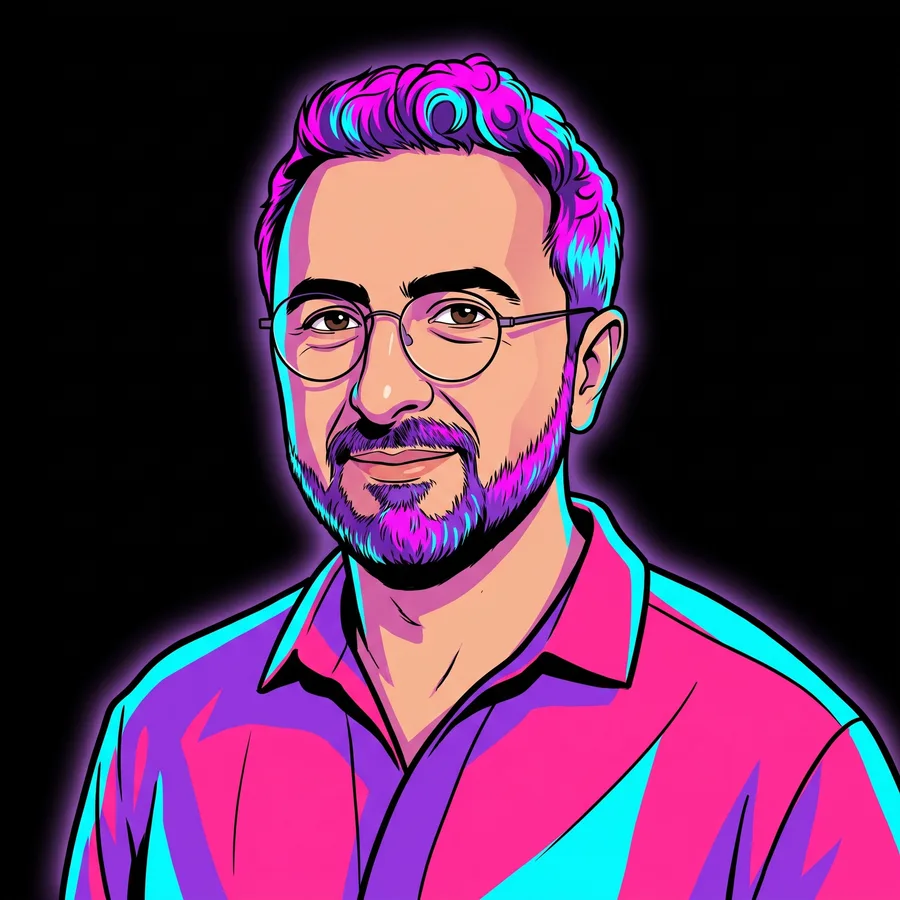
There are people who build AI from laboratories and people who bring it out into the world. Mustafa Suleyman, born in London in 1984 to a Syrian taxi driver father and an English nurse mother, grew up without imagining he'd end up at the center of the most consequential technological revolution of our era. He left Oxford without finishing his philosophy degree to co-found, in 2010, a small startup called DeepMind alongside Demis Hassabis and Shane Legg. The bet seemed ambitious to the point of absurdity: build general-purpose artificial intelligence from scratch, in London, without Silicon Valley resources. Four years later, Google acquired it for around 500 million dollars.
Inside Google DeepMind, Suleyman didn't lead the research behind the papers everyone cites. His work was different: turning that research into real things. As head of Applied AI, he led projects that used AI to reduce Google's data center energy consumption by 40 percent and collaborated with the UK's NHS on medical diagnostics initiatives. In 2022, he co-founded Inflection AI alongside Reid Hoffman and Karén Simonyan, with the goal of creating a more personal and conversational AI. In 2023 they launched Pi, a chatbot designed to accompany, not just to answer. In March 2024 he joined Microsoft as CEO of Microsoft AI, leading Copilot, Bing, and Edge.
But perhaps the most unexpected turn in his career came with a book. In 2023 he published "The Coming Wave" (co-written with Michael Bhaskar), a New York Times bestseller arguing that the combination of artificial intelligence and synthetic biology represents the greatest challenge humanity has ever faced. He calls it the containment problem: the task of keeping some control over technologies so powerful they could outpace any regulatory structure. The striking detail is that the book was written by someone who has spent 15 years building those same technologies. That tension, building and warning at the same time, defines Suleyman in a way few tech leaders embody with equal honesty.
What I find fascinating about Mustafa is that his trajectory proves something many people underestimate: the difference between a good AI idea and a real-world impact isn't the algorithm, it's the execution. He is that rare bridge between the lab and everyday life. And if today you have access to AI tools that genuinely work, part of that road was paved by someone who left university early and decided that a clear vision and the stubbornness to follow it were enough.
Official links for Mustafa Suleyman, The architect who built applied AI
More figures who shaped AI in AI Legends, or back to the news.