
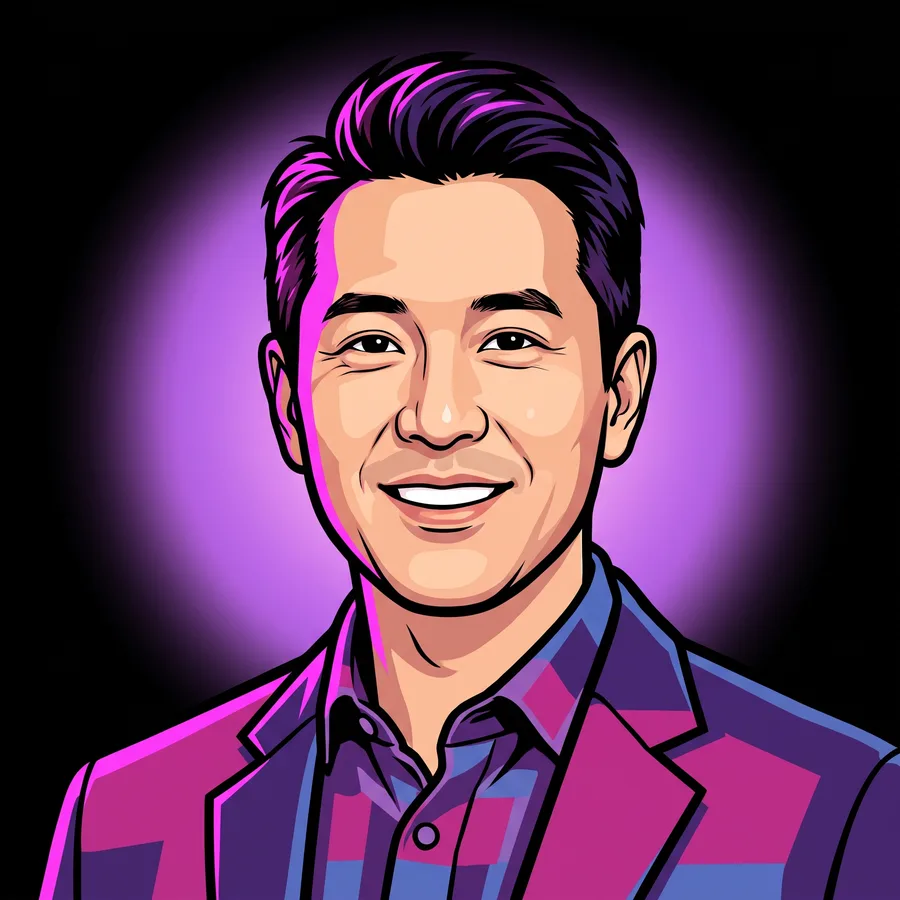
Some problems seem unsolvable until someone comes along and says: "hey, what if we just skip around it?" That's what Kaiming He did in 2015 with one of the most frustrating bottlenecks in deep learning: the more layers you added to a neural network to make it smarter, the worse it learned. More depth was supposed to mean more power, but in practice there came a point where the network would "forget" what it had seen and start degrading. He, then a researcher at Microsoft Research Asia, proposed a solution that sounds elegant today but was genuinely disruptive at the time: let information travel directly, skipping entire layers through "residual connections." The network could choose whether to use a layer or simply jump over it.
The result was ResNet, presented at CVPR 2016. The architecture trained networks of up to 152 layers without degradation, won the ImageNet Large Scale Visual Recognition Challenge (ILSVRC) 2015 with just 3.57% error (the best the field had ever seen at that point), and gave the entire industry a reference model for computer vision. The paper "Deep Residual Learning for Image Recognition" now has more than 300,000 citations and is considered one of the most influential papers of the 21st century. That same year, He also received the Best Paper Award at CVPR 2016. Then in 2017, he co-authored Mask R-CNN, another architecture that redefined object detection and segmentation, which won the Marr Prize (best paper) at ICCV 2017.
Trained at Tsinghua University (BS) and the Chinese University of Hong Kong (PhD), He spent time at Microsoft Research Asia and Meta AI Research (2016-2024) before becoming an associate professor at MIT, where he holds the Douglas Ross Career Development Professor of Software Technology chair. Since 2024, he also works as a Distinguished Scientist at Google DeepMind. His awards include the PAMI Young Researcher Award (2018), the PAMI Everingham Prize (2021), and the ICCV Test of Time Award (Helmholtz Prize, 2025), among others.
What strikes me about Kaiming He isn't just the scale of his papers' impact (though 300,000 citations are no joke), but the nature of the idea itself: a connection that jumps over layers. It wasn't a grand hardware invention or a massive new dataset. It was rethinking how information flows. Every time you ask a model to identify something in a photo, there are residual connections working silently behind the scenes, inherited from that intuition of his. Today's AI is, in large part, the product of knowing when to skip a step rather than force it.
Official links for Kaiming He, The father of networks that skip forgetting
More figures who shaped AI in AI Legends, or back to the news.