
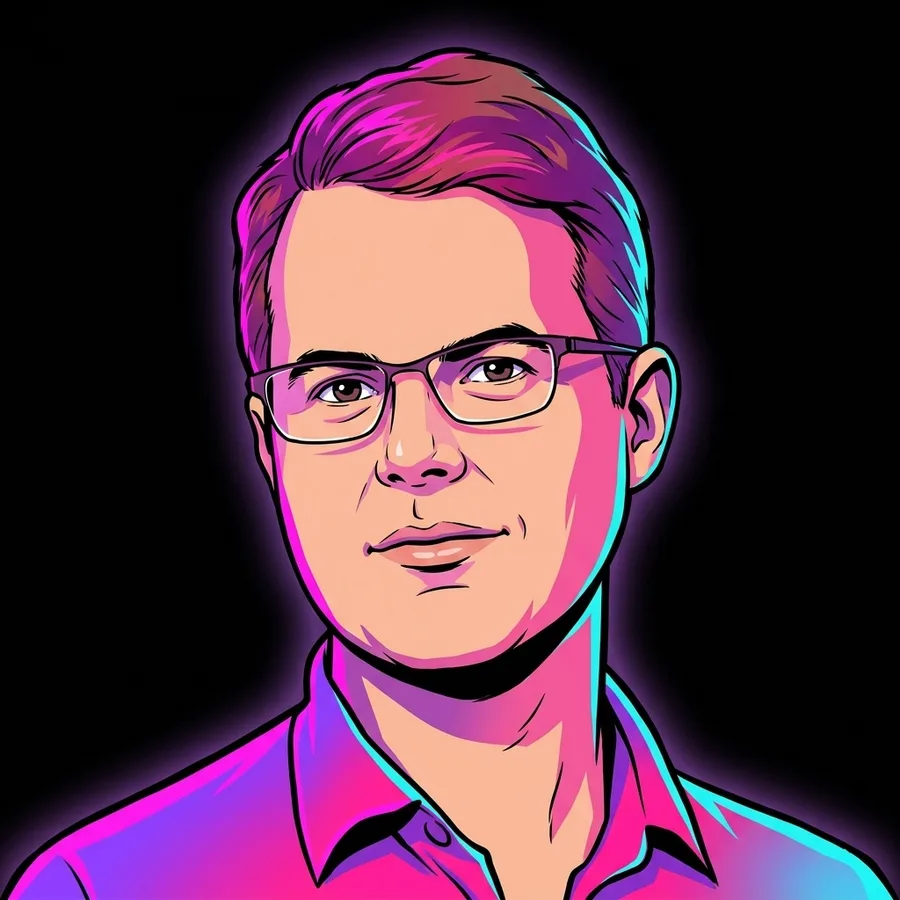
There are scientists who study what AI does, and there are scientists who study what AI is on the inside. Christopher Olah belongs to the second group, and that is why he matters so much. From his early days at Google Brain, where in 2015 he helped create DeepDream (those psychedelic images that showed what neural networks "saw"), Olah became obsessed with a question almost no one else was taking seriously: can we truly understand how a neural network works from the inside? Not as a black box that produces results, but as a system we can read, like a program we can study line by line.
In 2017 he co-founded Distill, a scientific journal created to do one difficult thing: publish machine learning research so clearly and visually that any intelligent person could follow it. In 2020 he launched the Circuits thread from OpenAI, a series of articles in Distill that showed for the first time with rigor that neural networks have identifiable internal structures: "neurons" that respond to specific concepts, "circuits" that process information in ways we can trace. Olah coined the term "mechanistic interpretability" to name this work, and in doing so founded a new field within AI safety.
In 2021 he was one of the co-founders of Anthropic, the AI lab built with safety at its core. There he leads the interpretability team, and in 2024 TIME named him to its list of the 100 most influential people in AI for a concrete breakthrough: his team identified clusters of neurons inside Claude that correspond to specific concepts, like recognizing bias or detecting scam emails, bringing science closer to the promise of being able to audit what an AI is thinking before deploying it. That same year he represented Anthropic at the AI summit at the Vatican, alongside Pope Leo. He does not hold a university degree (he left after his first year), but that was never an obstacle to doing world-class science.
What I find most fascinating about Olah is not just his technical work, it is his attitude toward the problem. While others build bigger and more powerful models, he sits in front of the model and says: hold on, explain to me how this works on the inside. That is the kind of curiosity that takes nothing for granted. And if we ever manage to have AI we can truly audit, AI that is not just powerful but understandable and trustworthy, it will be in large part thanks to people like him who refused to accept the black box as the final answer.
Official links for Christopher Olah, The man who wants to see inside AI
More figures who shaped AI in AI Legends, or back to the news.