
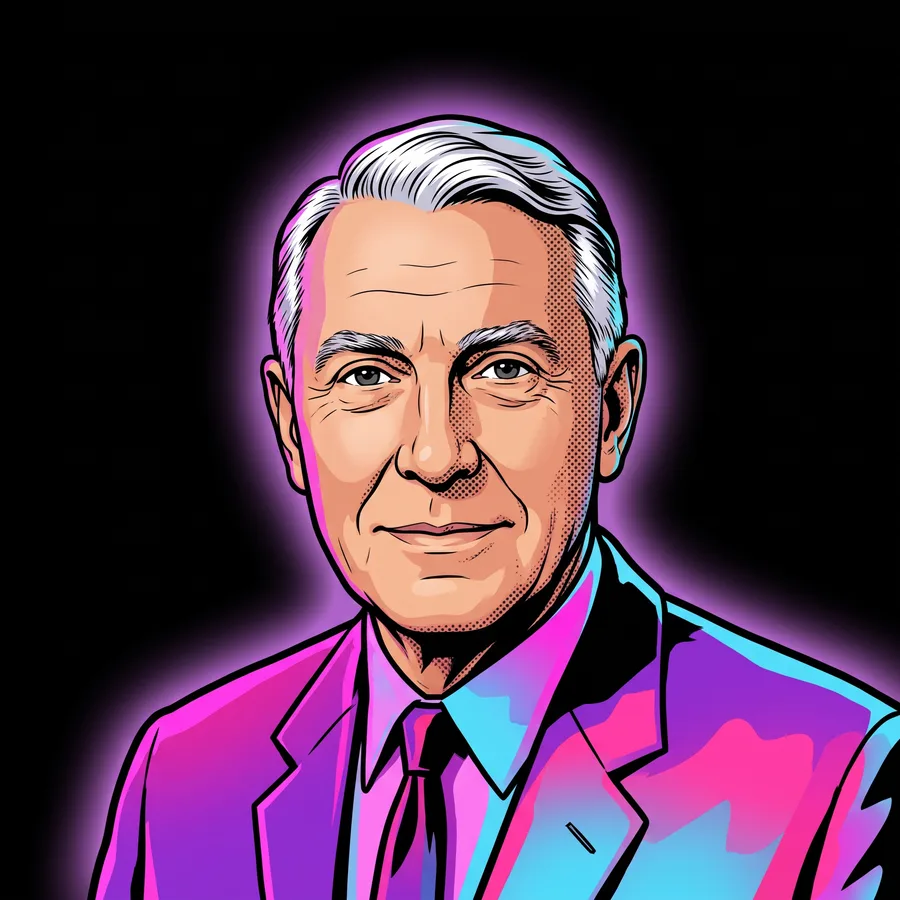
Some people change the world, and some people name it. Arthur Lee Samuel did both. This electrical engineer from Kansas, trained at MIT, arrived at IBM's research laboratories in 1949 with a question that almost no one took seriously: could a computer learn to do something better through practice? Most of the field believed computers were simply glorified calculators: very fast at following instructions, but incapable of improving on their own. Samuel wasn't convinced.
In 1952, he wrote a checkers-playing program for the IBM 701, the company's first commercial computer. What that program did was radical for the time: it used search techniques, scoring functions, and something he called "rote learning," which allowed it to improve its strategy game by game. In 1959 he published "Some Studies in Machine Learning Using the Game of Checkers" in the IBM Journal of Research and Development, and there he said it for the first time: "machine learning," the ability of computers to learn without being explicitly programmed for every task. That paper is one of the most cited in the history of artificial intelligence.
His career was long and rigorous. He spent 17 years at IBM Research in Poughkeepsie, New York (1949 to 1966), then joined Stanford University, where he worked as a researcher until 1982. In 1987, at age 85, the IEEE Computer Society awarded him the Computer Pioneer Award, recognizing that his work had opened a path the rest of the field would take decades to travel. He died in Stanford on July 29, 1990.
What I find most admirable about Arthur Samuel is that he didn't just have the idea, he demonstrated it. In 1962 he went on television to show how his checkers program beat human players, and that made it real for the world. Today, when you use Claude to analyze a document, or when an app recommends something you love, there is a direct line back to that engineer who asked, in 1952, whether a computer could learn. Spoiler: it could.
Official links for Arthur Samuel, The man who coined 'machine learning'
More figures who shaped AI in AI Legends, or back to the news.