You hear “machine learning” everywhere, and you might assume it’s something too technical to understand without a PhD in mathematics. Let me tell you something: it’s not. And you probably already use it several times a day without realizing it.
Machine learning, or automated learning as it’s sometimes called, is one of the most powerful ideas behind modern artificial intelligence. But explained well, it’s surprisingly intuitive.
The core idea: learning from examples
The traditional way to program a computer is to write it exact rules. If you want a program to detect whether an email is spam, you’d write: “If the email has the word ‘free’ in the subject, mark it as spam. If it has more than three exclamation marks…”
The problem is that spammers adapt. They always find a workaround. Fixed rules don’t scale.
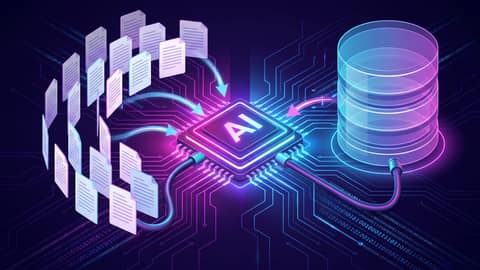
Machine learning works differently. Instead of giving it rules, you give it examples. Thousands or millions of emails labeled as “spam” or “not spam,” and you say: “Find the patterns yourself.” The computer analyzes those examples, discovers what spam emails have in common, and builds its own model to classify new emails.
That, in essence, is machine learning: a system that learns to do something from data, instead of following hand-written instructions.
Examples you already use every day
To make it more concrete, think about these situations:
-
Netflix and Spotify: when they recommend what you know you’re going to love, that’s not magic. It’s a model trained on millions of user preferences that found people with tastes similar to yours loved that show or that song.
-
Google Maps calculating your arrival time: it learns from historical (and real-time) traffic patterns to estimate how long you’ll take. It doesn’t follow a fixed rule; it uses what it has seen before.
-
Your email spam filter: exactly the example above. Gmail learned to detect spam from millions of emails labeled by its users.
-
Unlocking your phone with your face: facial recognition uses machine learning to identify the unique features of your face.
-
Autocorrect and text suggestions: they learn from how you type and from millions of previous texts to predict the next word.
How it learns (without the math)
Imagine you want to teach a child to tell dogs from cats. You don’t explain the technical definition of each one. You show them photos. “This is a dog. This is a cat.” After seeing enough examples, the child can tell apart a new one they’ve never seen before.
Machine learning does something similar, but with numbers instead of visual intuition. The system receives the examples, finds mathematical patterns in them, and uses those to make predictions about things it has never seen.
The basic process has three parts:
- Data: the examples it learns from.
- Training: the system analyzes that data and adjusts its internal model.
- Prediction: with the model already trained, it can analyze new data and make predictions.
What makes machine learning special is that, with enough quality data, it can find patterns that no human would ever identify manually.
Not all AI is machine learning (and vice versa)
An important distinction: artificial intelligence is a broader concept. Machine learning is one of the ways to build AI, and today it’s the most powerful and important one. Within machine learning there’s “deep learning,” which uses neural networks inspired by the human brain. ChatGPT, Claude, Gemini, all use deep learning to generate text. If you want to understand it better, here I explain deep learning in plain words.
But not all AI uses machine learning. A “smart” thermostat that follows fixed rules doesn’t learn from data; it follows instructions.
Why this matters for you
You don’t need to know how your car’s engine works to drive well. But knowing it exists helps you understand why it overheats if you skip maintenance.
With machine learning something similar happens. Knowing that Netflix’s recommendations learn from your habits explains why they change over time. Knowing that a chatbot is only as good as the data it was trained on helps you understand why it sometimes gets things wrong that seem obvious.
And the most practical part: understanding that machine learning needs data gives you a real advantage. When you use AI tools in your work, you’ll know that the more relevant information you give it, the better it performs. Context is the fuel.
You already use it, now you understand it
The next time Netflix recommends something perfect, or your email filters spam without you asking, remember: that’s not magic or coincidence. It’s a system that learned from millions of examples to serve you better.
Now that you know what it is, everything else you hear about AI will make a lot more sense.
Want these tools compared in depth? Check the unbiased reviews.