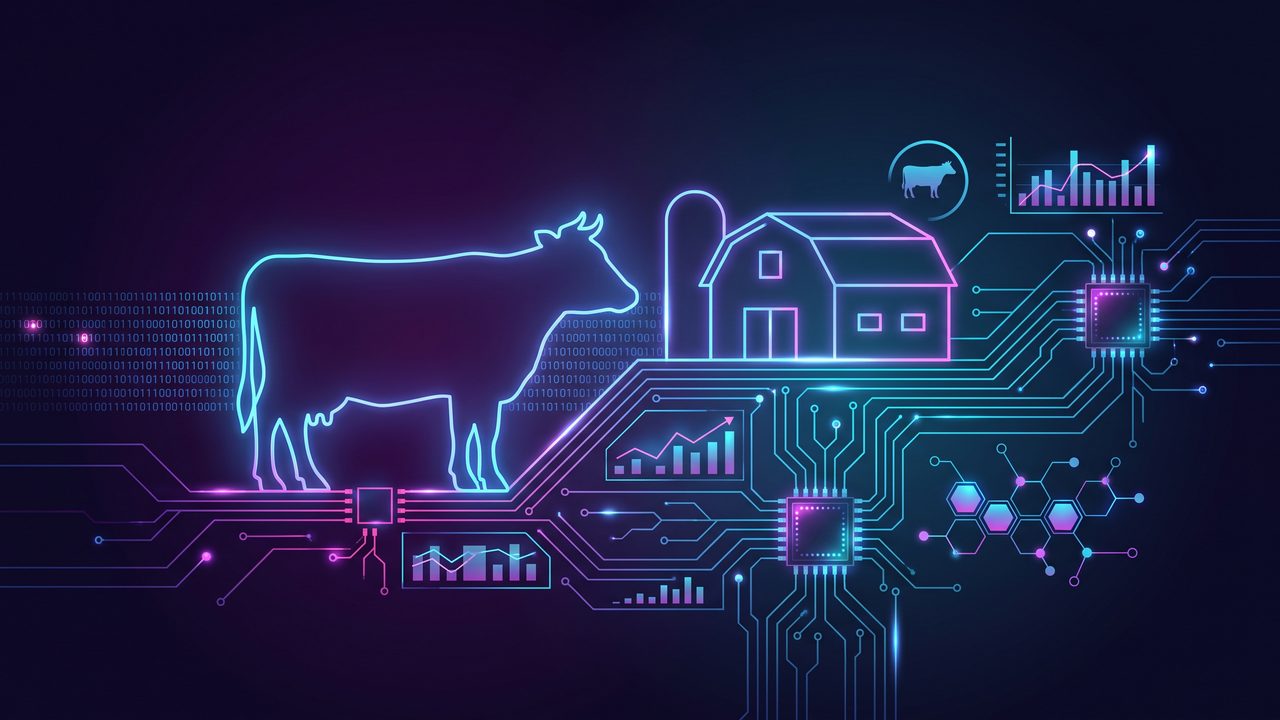
If you’re an animal scientist or a livestock production technician, you know the field doesn’t wait: you have to weigh animals, balance rations, keep health records and, on top of that, explain all of it to the producer in a way they understand and can use. Artificial intelligence won’t walk the pen for you, but it can take back many hours of desk work so you can spend your judgment on what truly matters: the animals and the production decisions.
The idea isn’t to replace your technical knowledge. It’s to make you more efficient, so your data turns into decisions faster.
Livestock data that speaks
A farm generates a ton of information: weights, daily gains, milk production, conversion rates. Often it lives in notebooks or in a huge spreadsheet nobody reviews in depth. That’s where an AI like Claude or ChatGPT helps you get value from it:
- Summarize the month’s records into the indicators that really matter.
- Flag animals or lots performing outside the norm.
- Compare periods: “how is weight gain this month versus last?”.
- Suggest which charts to build to present the results to the producer.
You paste the table or describe your data and in minutes you have a clear read, ready to review with your expert eye.
Support for diet formulation
Formulation is pure calculation: balancing energy, protein and minerals for the animal’s stage and what’s available. AI doesn’t replace your specialized software or the requirement tables, but it does help you:
- Organize and compare ingredients by nutritional contribution.
- Explain, step by step, an adjustment when input prices change.
- Draft the technical justification for a ration for your report or your client.
Here’s a firm rule: always verify the numbers against your official tables and your experience. AI can mix up units or a requirement; you have the final word.
Health reports and communicating with producers
A big part of your work ends up in a document: the health report, the management plan, the recommendation. Writing that clearly takes time. AI gives you a draft in seconds:
- Turn your field notes into a tidy, professional report.
- Translate the technical into plain language for the producer.
- Draft follow-up messages: vaccination reminders, deworming, upcoming visits.
You review, adjust with your judgment and deliver. The producer gets something clear and you get your afternoon back.
Protect the data and the judgment
Two reminders to stay firm on:
- AI assists, it doesn’t decide. Use it for drafts, supporting calculations and organization, not as your final source of truth in animal health or nutrition.
- Protect sensitive farm information before uploading it to any tool; check its privacy policies.
Start small
You don’t have to digitize the whole farm this week. Pick a single task: maybe that monthly report you always leave for last, or the weighing summary. Try it with an AI and see how much time you get back.
I build things with AI without being an animal scientist, so imagine what you can do, knowing the field the way you do. The tool makes you more efficient; the technical judgment is still yours.
Want these tools compared in depth? Check the unbiased reviews.