Artificial intelligence assistants are evolving rapidly, and two tools attracting attention are Claude Copilot and Manus. While both aim to help users become more productive, they approach tasks in very different ways. Understanding their strengths and limitations can help businesses, creators, and professionals choose the right solution for their needs.
Claude Copilot is built around conversational intelligence, offering users a highly capable AI assistant that excels at writing, research, coding, brainstorming, and problem-solving. Its primary strength lies in its ability to understand context, reason through complex topics, and generate detailed, human-like responses. Many users rely on it as a collaborative thinking partner rather than simply a task automation tool.
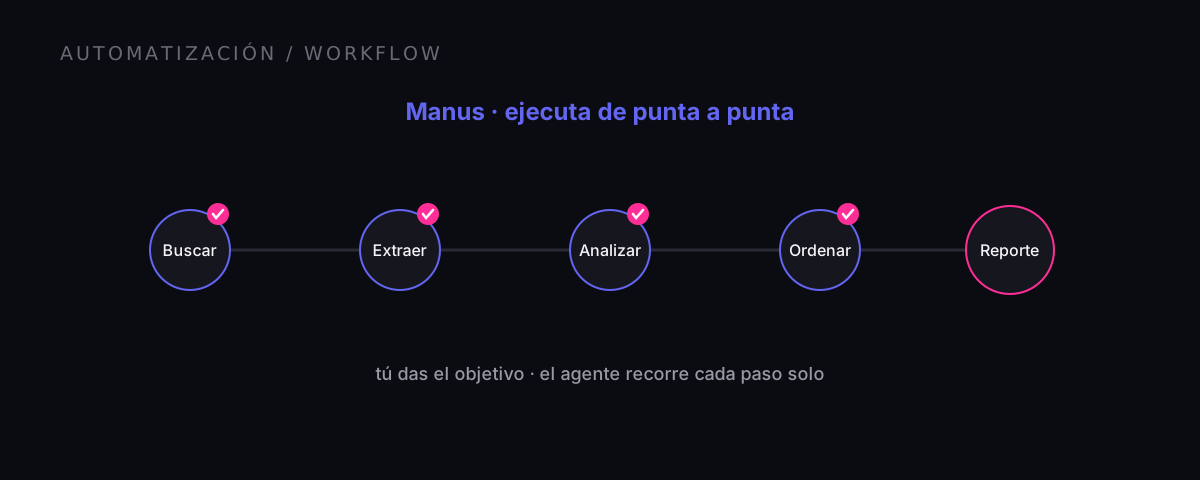
Manus, on the other hand, is designed to function more like an autonomous AI agent. Instead of simply answering questions, Manus can perform multi-step workflows, conduct extensive research, navigate websites, and complete tasks with minimal human intervention. This makes it particularly attractive for users who want to delegate entire processes rather than work through them interactively.
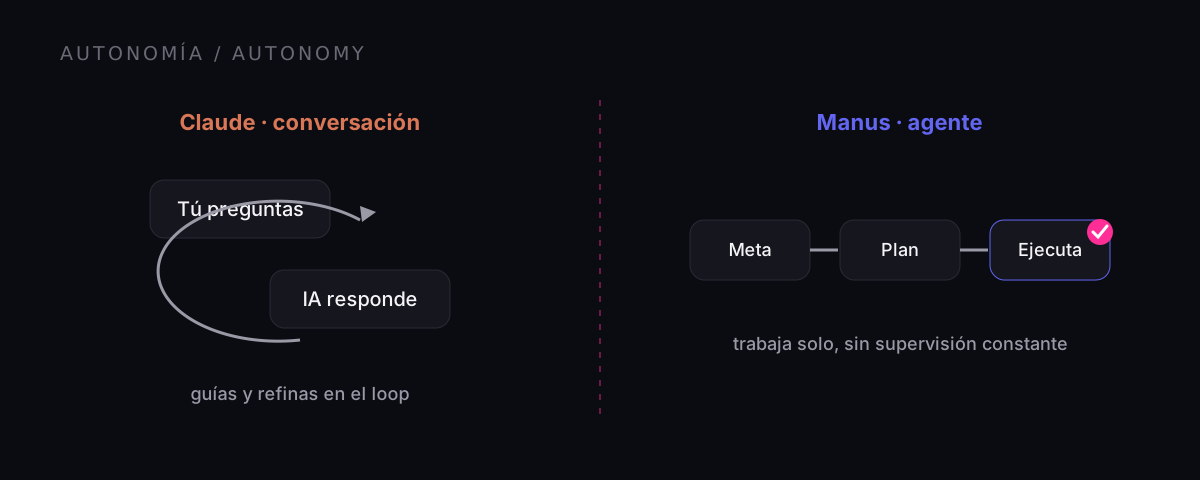
One of the biggest differences between the two platforms is the level of autonomy they provide. Claude Copilot typically works in a conversational loop where users guide the process and refine results through ongoing interaction. Manus is designed to take a goal, create a plan, and execute much of the work independently, reducing the need for constant supervision.
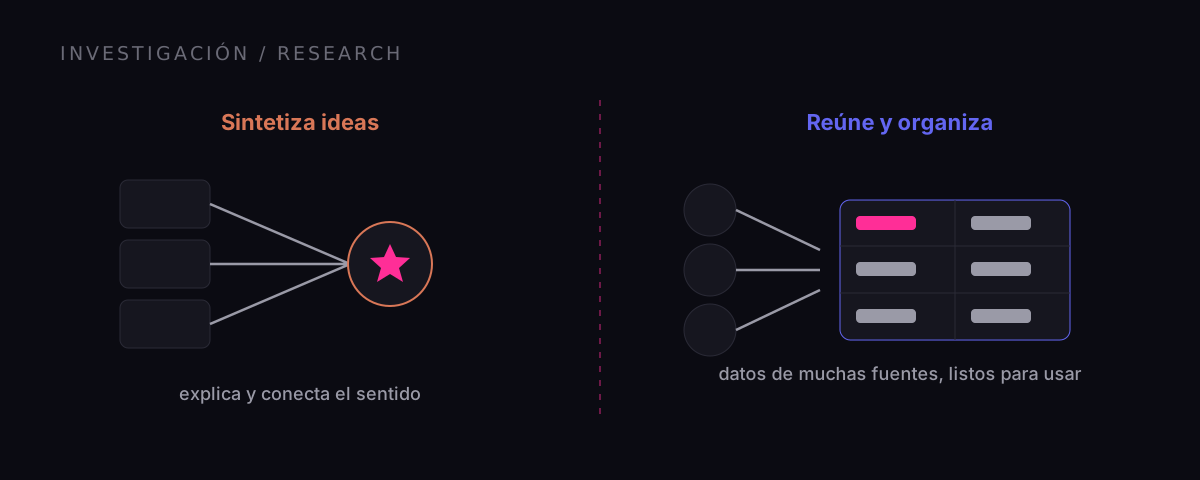
When it comes to research capabilities, both tools are impressive but serve different purposes. Claude Copilot is excellent at synthesizing information, explaining concepts, and generating insights from available data. Manus often focuses on gathering information from multiple sources and organizing findings into actionable outputs, making it useful for large-scale research projects.
For content creation, Claude Copilot often has an advantage due to its strong language generation capabilities. Writers, marketers, and business professionals appreciate its ability to produce polished articles, emails, reports, and marketing copy. Its responses frequently require minimal editing and can be tailored to specific tones and audiences.

Manus shines in workflow automation and task execution. Users can assign complex objectives such as market research, lead generation, competitor analysis, or data collection, allowing the platform to work through multiple steps on its own. This can significantly reduce the amount of manual effort required for repetitive or time-consuming tasks.
Pricing and usage models may also influence a user’s decision. Because Manus often operates through a credit-based system that consumes resources as tasks are executed, users must carefully manage their usage. Claude Copilot generally focuses more on conversation-based interactions, which may provide a more predictable experience depending on the subscription plan.
The ideal choice ultimately depends on how you prefer to work. Users who want a powerful AI collaborator for writing, strategy, coding, and creative thinking may find Claude Copilot to be the better fit. Those seeking a more autonomous digital worker capable of executing complex workflows may benefit more from Manus.
As AI technology continues to advance, the distinction between conversational assistants and autonomous agents will likely become less pronounced. For now, Claude Copilot and Manus represent two different visions of productivity: one centered on collaboration and intelligence, and the other focused on automation and execution. Understanding these differences can help you choose the tool that best aligns with your goals and workflow.
Case Study: Building a Competitive Analysis Report
To better understand the differences between Claude Copilot and Manus, let’s look at a real-world marketing scenario. A digital marketing manager needs to create a competitive analysis report for a new marketing campaign. The goal is to identify competitors, analyze their offers, review their websites and social media presence, and produce a professional report with recommendations.
Using Claude Copilot, the marketing manager begins by providing information about the business, target audience, and desired outcomes. Claude helps define the research framework, suggests competitors to evaluate, creates a comparison matrix, drafts survey questions, and outlines the final report structure. Throughout the process, Claude acts as a strategic advisor, helping refine ideas and providing detailed explanations for each recommendation.
When tasked with gathering the actual data, Claude can summarize information provided by the user and analyze research findings. However, the user still needs to collect much of the source material, provide links, or guide the research process step by step. Claude excels at interpretation, reasoning, and content creation, but it generally relies on the user to drive the workflow.
Using Manus, the same project starts differently. The user provides a high-level objective: create a competitive analysis of five competitors targeting the same audience. Manus develops a research plan, visits multiple websites, gathers pricing information, reviews promotions, analyzes social media channels, and compiles findings into a structured report. Much of the research and organization happens with minimal user involvement.
Once the data is collected, Manus can automatically generate charts, summaries, comparison tables, and presentation-ready documents. The platform’s autonomous workflow capabilities significantly reduce the amount of manual effort required to complete the project. For users managing large research tasks, this can translate into substantial time savings.
The final reports generated by both tools are valuable, but their strengths become apparent in different areas. Claude Copilot often produces more nuanced analysis, deeper strategic insights, and stronger written content. Its recommendations tend to feel more thoughtful and tailored because of its advanced reasoning and conversational refinement capabilities.
Manus, however, excels at execution speed and task automation. The platform can complete large portions of the research process independently, making it particularly effective for gathering information, compiling datasets, and managing multi-step projects that would otherwise require significant human effort.
In this specific case study, Manus clearly outperforms Claude Copilot during the research and data collection phases. Its autonomous agent architecture allows it to gather and organize information much faster than a conversational assistant can. Users looking to automate repetitive research tasks may find Manus to be the more efficient solution.
Claude Copilot takes the lead during the strategy, interpretation, and content refinement stages. The quality of the final recommendations, executive summaries, persuasive writing, and stakeholder-facing reports often benefits from Claude’s stronger reasoning and language generation capabilities.
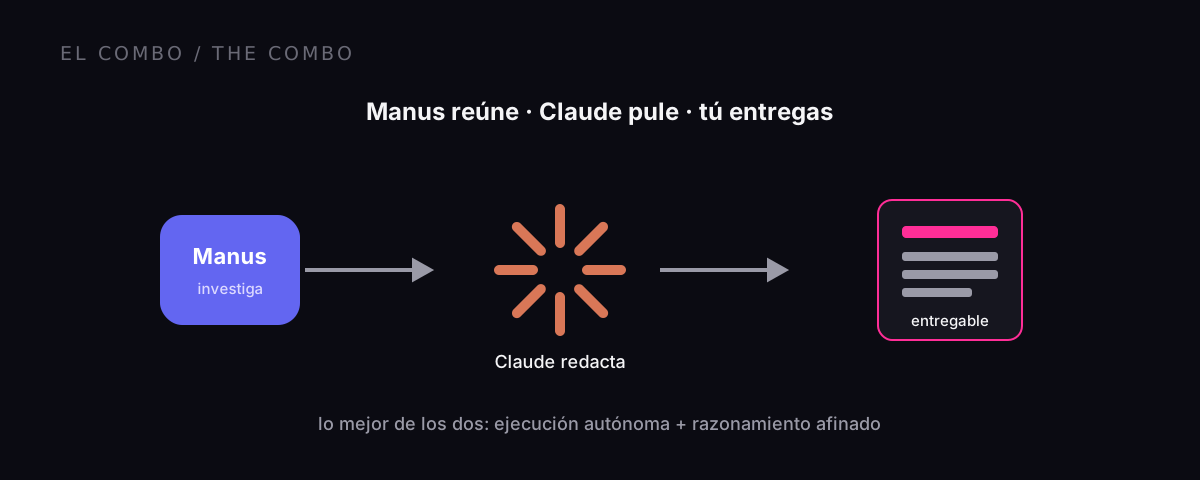
The most effective approach may actually be combining both tools. Manus can handle the heavy lifting of research, data collection, and workflow execution, while Claude Copilot can transform those findings into compelling narratives, strategic recommendations, and polished deliverables. Together, they create a powerful workflow that leverages the best of both autonomous execution and advanced reasoning.
Want these tools compared in depth? Check the unbiased reviews.