
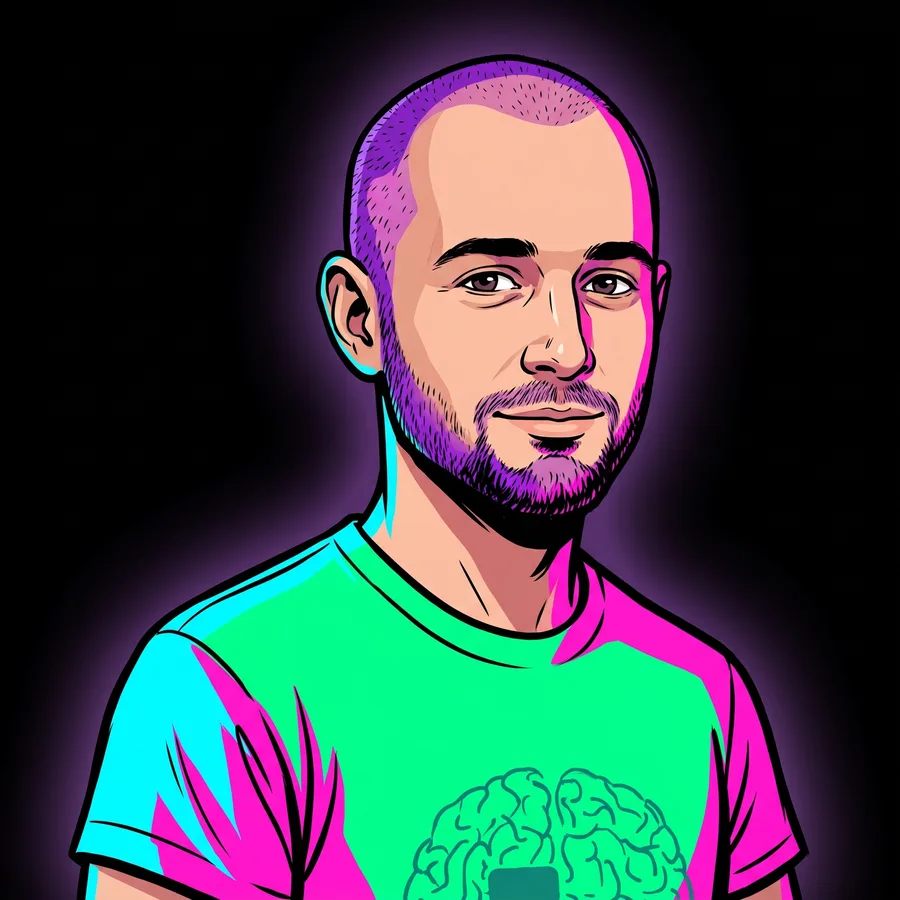
Few people can say they were present at two of the moments that changed the history of artificial intelligence. Ilya Sutskever is one of them. Born in Russia in 1986, he grew up in Israel and came to Canada at 16 to study at the University of Toronto, where he fell under the wing of Geoffrey Hinton, the godfather of deep learning. That was his first spark: understanding that neural networks, ignored by almost the entire field, held something others couldn't yet see.
In 2012, together with Hinton and Alex Krizhevsky, he presented AlexNet: a deep convolutional network that dominated the ImageNet competition, cutting the error rate to nearly half of the previous best result. It wasn't just winning a contest; it was proving, with data, that deep learning was real. That paper is one of the most cited in the history of computing. From there, Sutskever moved to Google Brain, and in 2015 he left to co-found OpenAI as its chief scientist, convinced that general-purpose AI was the most important problem that existed and that it had to be built openly and responsibly.
At OpenAI he was the quiet architect of the scaling bet: the idea that more data, more compute, and larger models produce qualitatively better intelligence. That intuition, which many questioned, was the backbone of GPT-2, GPT-3, and eventually ChatGPT. He also contributed to DALL-E, CLIP, and the reasoning models that surprise us today. His list of recognitions includes the NeurIPS Test of Time Award three consecutive years (2022, 2023, and 2024). In May 2024 he announced he was leaving OpenAI to work on something he described as "very personally meaningful." In June 2024 came the answer: Safe Superintelligence Inc. (SSI), a company he co-founded with Daniel Gross and Daniel Levy, with a single mission: to build safe superintelligence without the distraction of products or commercial pressure.
The lesson I take from Ilya Sutskever is that a real researcher doesn't only build; they also ask whether they should. He bet on scaling AI when it was a radical idea, scaled it all the way to ChatGPT, and then left to work on how to do it right. There's no contradiction in that; there's consistency. Every time you ask Claude to reason step by step or explain something complex, you're using a tool shaped, in part, by that conviction that artificial intelligence can be enormous and also responsible.
Official links for Ilya Sutskever, The mind that scaled AI
More figures who shaped AI in AI Legends, or back to the news.