
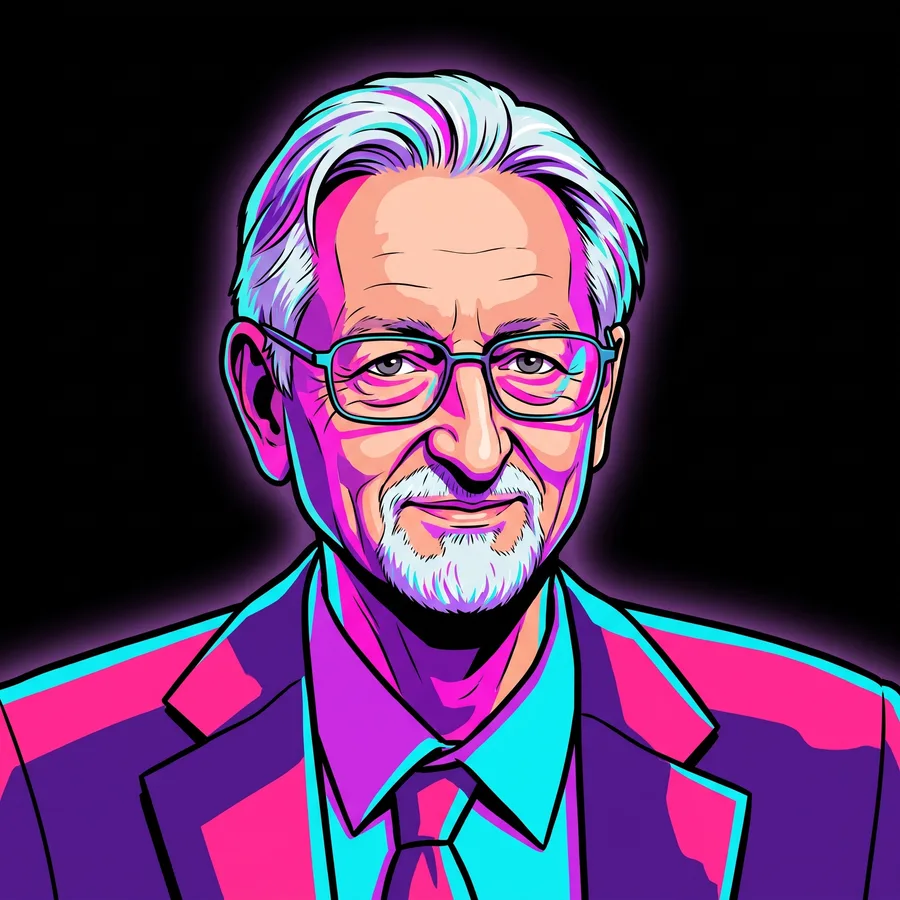
Si la inteligencia artificial moderna tuviera un árbol genealógico, Geoffrey Hinton estaría cerca de la raíz. Este psicólogo cognitivo y científico de computación británico-canadiense pasó décadas trabajando en redes neuronales cuando la mayoría del campo las daba por muertas. Mientras otros decían que esa idea no llevaba a ningún lado, él siguió, terco y paciente, convencido de que una máquina podía aprender un poco como aprende un cerebro.
En 1986 ayudó a popularizar la "retropropagación", la técnica que permite que una red ajuste sus errores y mejore sola. Pero el momento que lo cambió todo llegó en 2012: junto a sus estudiantes Alex Krizhevsky e Ilya Sutskever, presentó AlexNet, una red que ganó por mucho un concurso de reconocimiento de imágenes y dejó al mundo con la boca abierta. Ese fue el chispazo que prendió la revolución del aprendizaje profundo en la que vivimos hoy.
Por ese trabajo recibió en 2018 el Premio Turing (el "Nobel de la computación") junto a Yoshua Bengio y Yann LeCun, y en 2024 un Premio Nobel de Física. En 2023 hizo algo poco común para alguien de su nivel: dejó su puesto en Google para poder hablar con libertad sobre los riesgos de la IA, sin que pareciera que defendía a una empresa.
Para mí, la lección de Hinton no es solo técnica, es humana. Creyó en una idea impopular por años, aguantó el "eso no va a funcionar", y cuando funcionó, tuvo la honestidad de advertir sobre lo que ayudó a crear. Cada vez que le escribes a Claude o generas una imagen, hay un pedacito de esa terquedad suya trabajando por debajo.
If modern artificial intelligence had a family tree, Geoffrey Hinton would sit near the root. This British-Canadian cognitive psychologist and computer scientist spent decades working on neural networks when most of the field had written them off. While others said the idea led nowhere, he kept going, stubborn and patient, convinced that a machine could learn a little the way a brain does.
In 1986 he helped popularize "backpropagation," the technique that lets a network adjust its own mistakes and improve on its own. But the moment that changed everything came in 2012: together with his students Alex Krizhevsky and Ilya Sutskever, he unveiled AlexNet, a network that crushed an image-recognition contest and left the world stunned. That was the spark that lit the deep learning revolution we live in today.
For that work he received the 2018 Turing Award (the "Nobel of computing") alongside Yoshua Bengio and Yann LeCun, and in 2024 a Nobel Prize in Physics. In 2023 he did something rare for someone at his level: he left his role at Google so he could speak freely about the risks of AI, without looking like he was defending a company.
To me, Hinton's lesson isn't only technical, it's human. He believed in an unpopular idea for years, endured the "that will never work," and when it did work, he had the honesty to warn about what he helped create. Every time you message Claude or generate an image, a little piece of that stubbornness of his is working underneath.
Más figuras que moldearon la IA en Leyendas del IA, o vuelve a las noticias. More figures who shaped AI in AI Legends, or back to the news.