
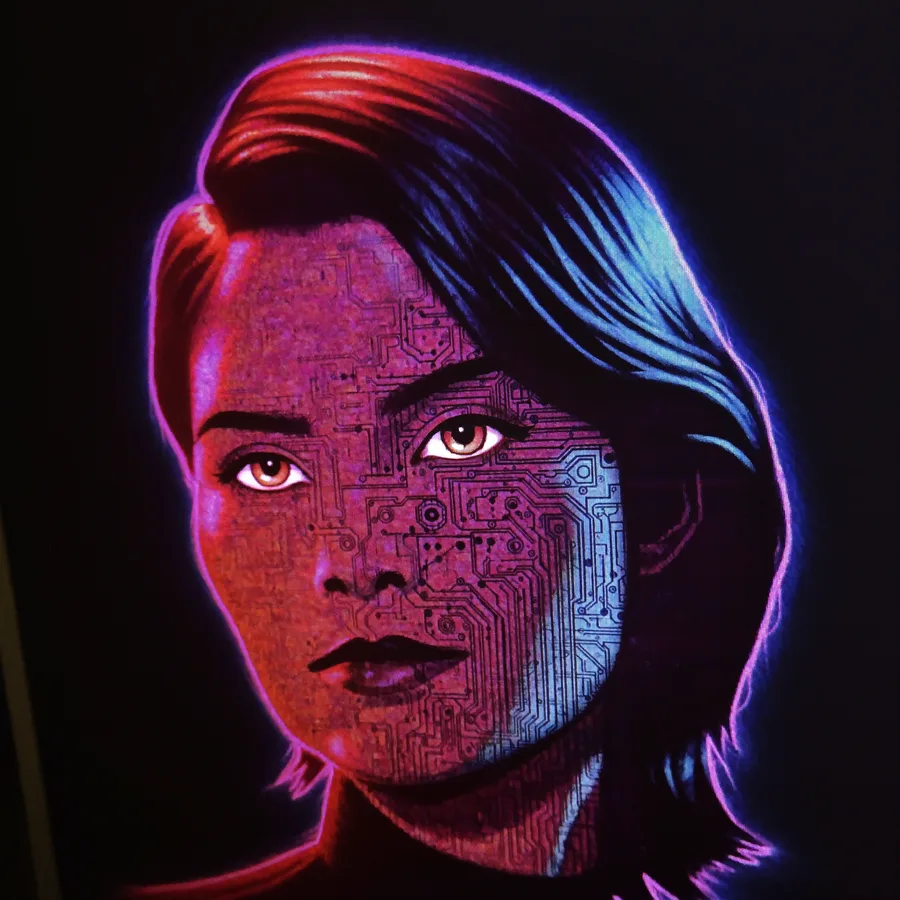
Fei-Fei Li llegó a los Estados Unidos a los 15 años desde Chengdu, China, sin hablar inglés con fluidez y con muy poco dinero. Sus padres trabajaban en lo que fuera mientras ella, impulsada por una curiosidad enorme, se abrió camino hasta Princeton, donde se graduó en física en 1999, y luego hasta Caltech, donde obtuvo su doctorado en 2005. Esa trayectoria de inmigrante, de apostar todo a la educación cuando las circunstancias decían que mejor no, se volvería el motor de todo lo que hizo después.
Su aporte más grande no fue un algoritmo, fue una obsesión: convencerse de que para que las máquinas pudieran entender imágenes, necesitaban ver millones de ellas, igual que aprenden los niños. El resultado fue ImageNet, un banco de datos de más de 14 millones de imágenes etiquetadas a mano que Li construyó a partir de 2007, apoyándose en trabajadores de Amazon Mechanical Turk de todo el mundo. En 2012, el concurso que organizó con esos datos, el ILSVRC, fue el escenario donde AlexNet demostró que las redes neuronales profundas podían reconocer imágenes con una precisión asombrosa. Ese momento fue el Big Bang del aprendizaje profundo moderno.
Dirigió el Laboratorio de Inteligencia Artificial de Stanford entre 2013 y 2018, fue Científica Jefa de IA en Google Cloud (2017-2018) y en 2019 cofundó el Instituto de IA Centrada en el Ser Humano de Stanford (HAI), donde trabaja para que la tecnología se diseñe con las personas en el centro, no al margen. En 2017 también cofundó AI4ALL, una organización sin fines de lucro que lleva la IA a jóvenes de comunidades subrepresentadas. En 2025, la revista Time la nombró Persona del Año: el campo que ayudó a nacer la estaba reconociendo como su figura central.
Lo que más me mueve de Fei-Fei Li es que pudo haberse quedado en el dato puro, en el laboratorio, en el paper. Pero decidió que construir IA sin preguntarse para quién y a qué costo era un error que no podía ignorar. Hoy, cada vez que Claude lee una imagen que le compartes, o que cualquier modelo entiende qué hay en una foto, hay una deuda silenciosa con el trabajo terco de esta mujer que llegó sin nada y le enseñó al mundo a ver.
Fei-Fei Li arrived in the United States at age 15 from Chengdu, China, without fluent English and with very little money. Her parents worked whatever jobs they could find while she, driven by enormous curiosity, made her way to Princeton, where she graduated in physics in 1999, and then to Caltech, where she earned her doctorate in 2005. That immigrant journey, of betting everything on education when circumstances suggested otherwise, would become the engine behind everything she did afterward.
Her greatest contribution wasn't an algorithm: it was an obsession. She became convinced that for machines to understand images, they needed to see millions of them, just the way children learn. The result was ImageNet, a dataset of more than 14 million hand-labeled images that Li began building in 2007, drawing on workers from Amazon Mechanical Turk around the world. In 2012, the competition she organized with that data, the ILSVRC, became the stage where AlexNet proved that deep neural networks could recognize images with stunning accuracy. That moment was the Big Bang of modern deep learning.
She directed the Stanford Artificial Intelligence Laboratory from 2013 to 2018, served as Chief Scientist of AI/ML at Google Cloud (2017-2018), and in 2019 co-founded the Stanford Institute for Human-Centered AI (HAI), where she works to ensure technology is designed with people at the center, not on the margins. In 2017 she also co-founded AI4ALL, a nonprofit that brings AI education to young people from underrepresented communities. In 2025, Time magazine named her Person of the Year: the field she helped create was recognizing her as its central figure.
What moves me most about Fei-Fei Li is that she could have stayed in the pure data, in the lab, in the paper. But she decided that building AI without asking for whom and at what cost was a mistake she couldn't ignore. Today, every time Claude reads an image you share, or any model understands what's in a photo, there's a quiet debt owed to the stubborn work of a woman who arrived with nothing and taught the world to see.
Más figuras que moldearon la IA en Leyendas del IA, o vuelve a las noticias. More figures who shaped AI in AI Legends, or back to the news.