
15 de junio de 2026 · Claude Copilot · Manus
Claude Copilot vs Manus: ¿Cuál asistente de IA es para ti?Claude Copilot vs Manus: Which AI Assistant Is Right for You?
Dos formas de ser productivo, un colaborador conversacional frente a un agente autónomo. Dónde gana cada uno y por qué el verdadero poder está en usar los dos juntos.Two visions of productivity, a conversational collaborator versus an autonomous agent. Where each one wins, and why the real power is using both together.
Los asistentes de inteligencia artificial avanzan a toda velocidad, y dos herramientas que están llamando la atención son Claude Copilot y Manus. Aunque las dos buscan hacerte más productivo, lo hacen de maneras muy distintas. Entender sus fortalezas y sus límites te ayuda, seas negocio, creador o profesional, a elegir la solución correcta para lo que necesitas.
Claude Copilot está construido alrededor de la inteligencia conversacional: un asistente muy capaz que brilla escribiendo, investigando, programando, generando ideas y resolviendo problemas. Su fuerza principal está en entender el contexto, razonar temas complejos y generar respuestas detalladas y con sonido humano. Mucha gente lo usa como un compañero de pensamiento, no solo como una herramienta para automatizar tareas.
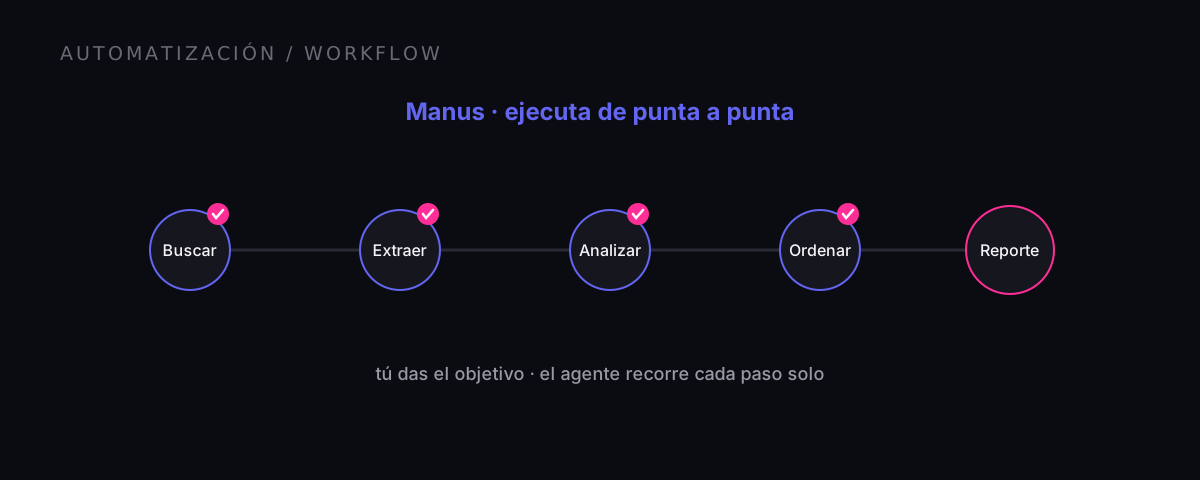
Manus, en cambio, está diseñado para funcionar más como un agente de IA autónomo. En lugar de solo responder preguntas, Manus ejecuta flujos de varios pasos, investiga a fondo, navega sitios web y completa tareas con mínima intervención humana. Eso lo hace muy atractivo para quien quiere delegar procesos completos en vez de ir resolviéndolos de forma interactiva.
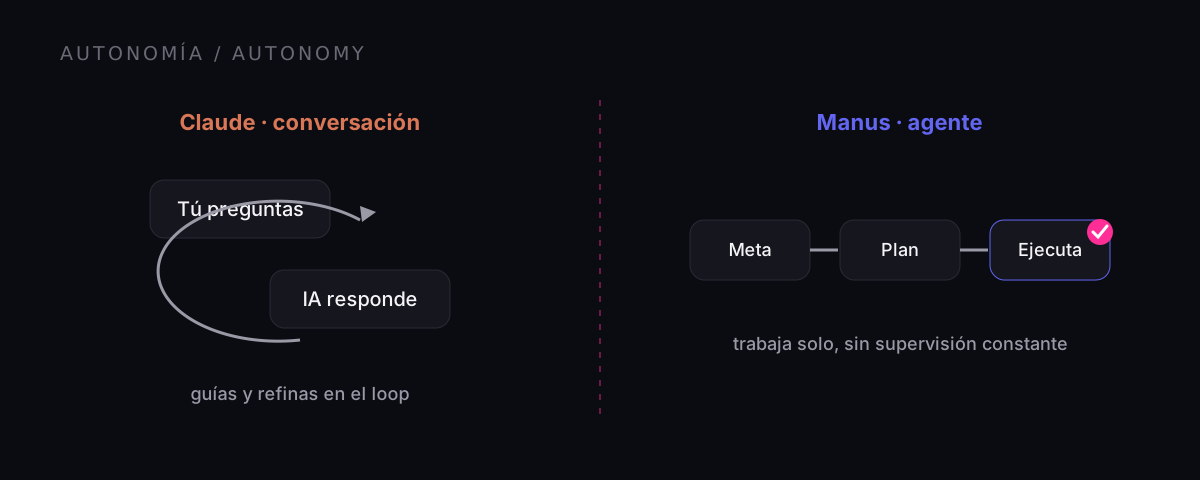
Una de las mayores diferencias entre ambas plataformas es el nivel de autonomía. Claude Copilot normalmente trabaja en un loop conversacional, donde tú guías el proceso y vas refinando los resultados con cada interacción. Manus está pensado para tomar un objetivo, crear un plan y ejecutar gran parte del trabajo por su cuenta, reduciendo la necesidad de supervisión constante.
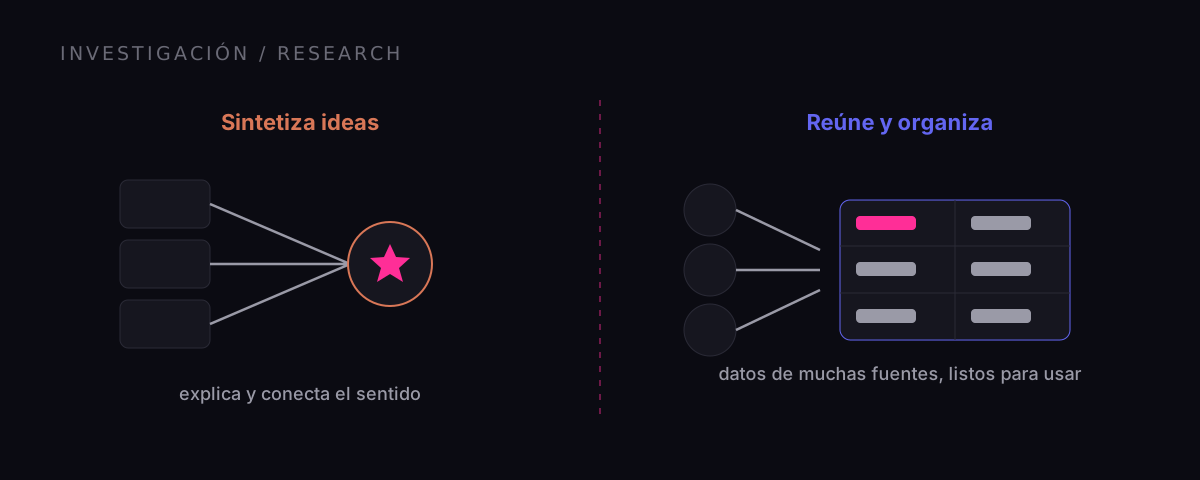
En cuanto a investigación, las dos impresionan, pero sirven para cosas distintas. Claude Copilot es excelente sintetizando información, explicando conceptos y sacando ideas a partir de los datos disponibles. Manus suele enfocarse en reunir información de muchas fuentes y organizar los hallazgos en resultados accionables, lo que lo hace útil para proyectos de investigación a gran escala.
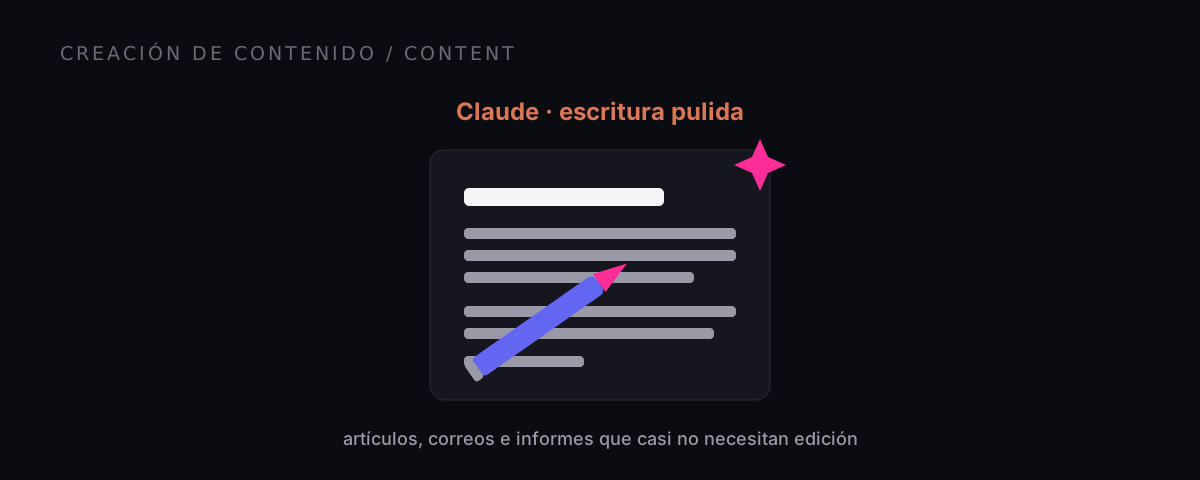
Para crear contenido, Claude Copilot suele llevar ventaja por su gran capacidad de generar lenguaje. A quienes escriben, hacen marketing o trabajan en negocio les encanta su forma de producir artículos, correos, informes y copy pulidos. Sus respuestas casi no necesitan edición y se pueden ajustar a un tono y una audiencia específicos.
Manus brilla en la automatización de flujos y la ejecución de tareas. Puedes asignarle objetivos complejos, investigación de mercado, generación de leads, análisis de competencia o recolección de datos, y dejar que recorra varios pasos por sí mismo. Eso reduce muchísimo el esfuerzo manual en tareas repetitivas o que comen tiempo.
El precio y el modelo de uso también pesan en la decisión. Como Manus suele operar con un sistema de créditos que se consume a medida que ejecuta tareas, hay que administrar bien el gasto. Claude Copilot se centra más en interacciones conversacionales, lo que puede dar una experiencia más predecible según tu plan.
La elección ideal depende, al final, de cómo prefieres trabajar. Si quieres un colaborador potente para escribir, definir estrategia, programar y pensar en creativo, Claude Copilot encaja mejor. Si buscas un trabajador digital más autónomo, capaz de ejecutar flujos complejos, Manus te conviene más.
A medida que la IA avance, la línea entre asistentes conversacionales y agentes autónomos se irá borrando. Por ahora, Claude Copilot y Manus representan dos visiones de productividad: una centrada en la colaboración y la inteligencia, y otra en la automatización y la ejecución. Entender la diferencia te ayuda a elegir la herramienta que mejor se alinea con tus metas y tu forma de trabajar.
Caso práctico: armar un informe de análisis de competencia
Para entender mejor la diferencia, veamos un escenario real de marketing. Una gerente de marketing digital necesita crear un informe de análisis de competencia para una campaña nueva. El objetivo: identificar competidores, analizar sus ofertas, revisar sus webs y redes sociales, y producir un informe profesional con recomendaciones.
Con Claude Copilot, la gerente empieza dándole información sobre el negocio, la audiencia y los resultados que busca. Claude la ayuda a definir el marco de investigación, sugiere competidores a evaluar, crea una matriz de comparación, redacta preguntas de encuesta y propone la estructura del informe final. Durante todo el proceso, Claude actúa como asesor estratégico: afina las ideas y explica el porqué de cada recomendación.
Cuando toca reunir los datos reales, Claude puede resumir la información que le pasa la usuaria y analizar los hallazgos. Pero ella todavía tiene que recolectar buena parte del material, dar los enlaces o guiar la investigación paso a paso. Claude destaca en interpretación, razonamiento y creación de contenido, pero en general necesita que tú lleves el timón.
Con Manus, el mismo proyecto arranca distinto. La usuaria da un objetivo de alto nivel: hacer un análisis de competencia de cinco competidores que apuntan a la misma audiencia. Manus arma un plan de investigación, visita varios sitios, reúne precios, revisa promociones, analiza redes sociales y junta todo en un informe estructurado. Gran parte de la investigación y la organización ocurre con mínima intervención.
Una vez reunidos los datos, Manus puede generar automáticamente gráficos, resúmenes, tablas comparativas y documentos listos para presentar. Su capacidad de flujo autónomo reduce muchísimo el esfuerzo manual. Para quien maneja tareas grandes de investigación, eso se traduce en un ahorro real de tiempo.
Los informes finales de las dos herramientas son valiosos, pero sus fortalezas aparecen en lugares distintos. Claude Copilot suele producir un análisis más matizado, ideas estratégicas más profundas y mejor contenido escrito. Sus recomendaciones se sienten más pensadas y a la medida gracias a su razonamiento avanzado y al refinamiento conversacional.
Manus, en cambio, destaca en velocidad de ejecución y automatización. Completa por su cuenta grandes partes del proceso, lo que lo hace especialmente efectivo para reunir información, armar conjuntos de datos y manejar proyectos de varios pasos que de otra forma exigirían mucho trabajo humano.
En este caso concreto, Manus le gana claramente a Claude Copilot en las fases de investigación y recolección de datos. Su arquitectura de agente autónomo le permite reunir y organizar información mucho más rápido que un asistente conversacional. Si buscas automatizar tareas repetitivas de investigación, Manus es la opción más eficiente.
Claude Copilot toma la delantera en la estrategia, la interpretación y el refinamiento del contenido. La calidad de las recomendaciones finales, los resúmenes ejecutivos, la escritura persuasiva y los informes para presentar suele beneficiarse de su mejor razonamiento y generación de lenguaje.
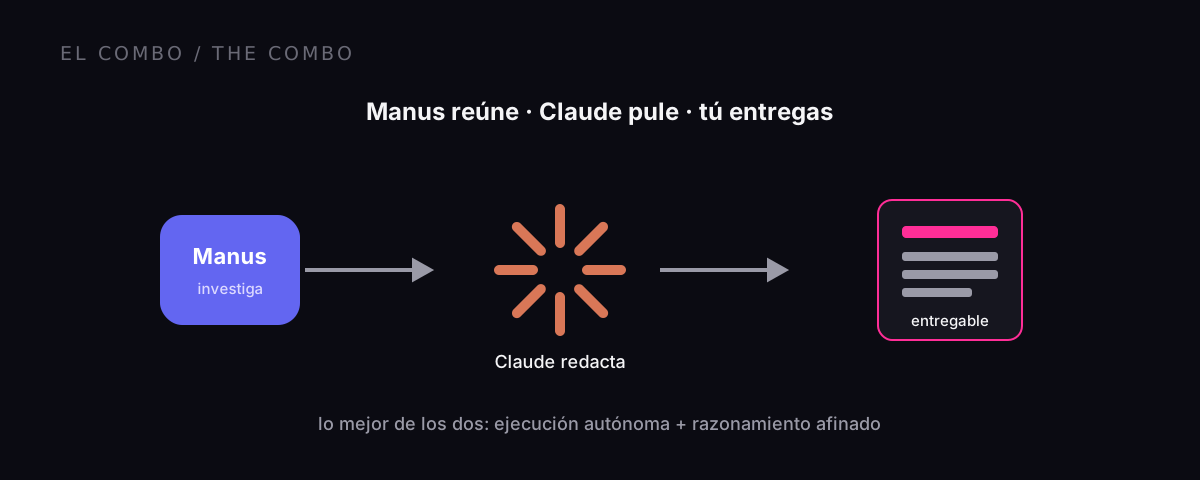
El enfoque más efectivo puede ser, en realidad, combinar las dos. Manus se encarga del trabajo pesado, investigación, recolección de datos y ejecución del flujo, y Claude Copilot transforma esos hallazgos en narrativas convincentes, recomendaciones estratégicas y entregables pulidos. Juntas crean un flujo potente que aprovecha lo mejor de la ejecución autónoma y del razonamiento avanzado.
Artificial intelligence assistants are evolving rapidly, and two tools attracting attention are Claude Copilot and Manus. While both aim to help users become more productive, they approach tasks in very different ways. Understanding their strengths and limitations can help businesses, creators, and professionals choose the right solution for their needs.
Claude Copilot is built around conversational intelligence, offering users a highly capable AI assistant that excels at writing, research, coding, brainstorming, and problem-solving. Its primary strength lies in its ability to understand context, reason through complex topics, and generate detailed, human-like responses. Many users rely on it as a collaborative thinking partner rather than simply a task automation tool.
Manus, on the other hand, is designed to function more like an autonomous AI agent. Instead of simply answering questions, Manus can perform multi-step workflows, conduct extensive research, navigate websites, and complete tasks with minimal human intervention. This makes it particularly attractive for users who want to delegate entire processes rather than work through them interactively.
One of the biggest differences between the two platforms is the level of autonomy they provide. Claude Copilot typically works in a conversational loop where users guide the process and refine results through ongoing interaction. Manus is designed to take a goal, create a plan, and execute much of the work independently, reducing the need for constant supervision.
When it comes to research capabilities, both tools are impressive but serve different purposes. Claude Copilot is excellent at synthesizing information, explaining concepts, and generating insights from available data. Manus often focuses on gathering information from multiple sources and organizing findings into actionable outputs, making it useful for large-scale research projects.
For content creation, Claude Copilot often has an advantage due to its strong language generation capabilities. Writers, marketers, and business professionals appreciate its ability to produce polished articles, emails, reports, and marketing copy. Its responses frequently require minimal editing and can be tailored to specific tones and audiences.
Manus shines in workflow automation and task execution. Users can assign complex objectives such as market research, lead generation, competitor analysis, or data collection, allowing the platform to work through multiple steps on its own. This can significantly reduce the amount of manual effort required for repetitive or time-consuming tasks.
Pricing and usage models may also influence a user’s decision. Because Manus often operates through a credit-based system that consumes resources as tasks are executed, users must carefully manage their usage. Claude Copilot generally focuses more on conversation-based interactions, which may provide a more predictable experience depending on the subscription plan.
The ideal choice ultimately depends on how you prefer to work. Users who want a powerful AI collaborator for writing, strategy, coding, and creative thinking may find Claude Copilot to be the better fit. Those seeking a more autonomous digital worker capable of executing complex workflows may benefit more from Manus.
As AI technology continues to advance, the distinction between conversational assistants and autonomous agents will likely become less pronounced. For now, Claude Copilot and Manus represent two different visions of productivity: one centered on collaboration and intelligence, and the other focused on automation and execution. Understanding these differences can help you choose the tool that best aligns with your goals and workflow.
Case Study: Building a Competitive Analysis Report
To better understand the differences between Claude Copilot and Manus, let’s look at a real-world marketing scenario. A digital marketing manager needs to create a competitive analysis report for a new marketing campaign. The goal is to identify competitors, analyze their offers, review their websites and social media presence, and produce a professional report with recommendations.
Using Claude Copilot, the marketing manager begins by providing information about the business, target audience, and desired outcomes. Claude helps define the research framework, suggests competitors to evaluate, creates a comparison matrix, drafts survey questions, and outlines the final report structure. Throughout the process, Claude acts as a strategic advisor, helping refine ideas and providing detailed explanations for each recommendation.
When tasked with gathering the actual data, Claude can summarize information provided by the user and analyze research findings. However, the user still needs to collect much of the source material, provide links, or guide the research process step by step. Claude excels at interpretation, reasoning, and content creation, but it generally relies on the user to drive the workflow.
Using Manus, the same project starts differently. The user provides a high-level objective: create a competitive analysis of five competitors targeting the same audience. Manus develops a research plan, visits multiple websites, gathers pricing information, reviews promotions, analyzes social media channels, and compiles findings into a structured report. Much of the research and organization happens with minimal user involvement.
Once the data is collected, Manus can automatically generate charts, summaries, comparison tables, and presentation-ready documents. The platform’s autonomous workflow capabilities significantly reduce the amount of manual effort required to complete the project. For users managing large research tasks, this can translate into substantial time savings.
The final reports generated by both tools are valuable, but their strengths become apparent in different areas. Claude Copilot often produces more nuanced analysis, deeper strategic insights, and stronger written content. Its recommendations tend to feel more thoughtful and tailored because of its advanced reasoning and conversational refinement capabilities.
Manus, however, excels at execution speed and task automation. The platform can complete large portions of the research process independently, making it particularly effective for gathering information, compiling datasets, and managing multi-step projects that would otherwise require significant human effort.
In this specific case study, Manus clearly outperforms Claude Copilot during the research and data collection phases. Its autonomous agent architecture allows it to gather and organize information much faster than a conversational assistant can. Users looking to automate repetitive research tasks may find Manus to be the more efficient solution.
Claude Copilot takes the lead during the strategy, interpretation, and content refinement stages. The quality of the final recommendations, executive summaries, persuasive writing, and stakeholder-facing reports often benefits from Claude’s stronger reasoning and language generation capabilities.
The most effective approach may actually be combining both tools. Manus can handle the heavy lifting of research, data collection, and workflow execution, while Claude Copilot can transform those findings into compelling narratives, strategic recommendations, and polished deliverables. Together, they create a powerful workflow that leverages the best of both autonomous execution and advanced reasoning.
¿Quieres ver estas herramientas comparadas a fondo? Pásate por las reseñas sin filtro. Want these tools compared in depth? Check the unbiased reviews.